26 Aug 2026
The Equations Behind Casino Bonuses: Analyzing Wagering Thresholds in Virtual Gaming Platforms

Virtual casino reward systems rely on specific mathematical structures to determine how much play a bonus requires before withdrawal becomes possible, and these structures vary across major platforms in ways that directly affect player outcomes. Wagering requirements typically appear as multipliers applied to the bonus amount, so a 30x requirement on a $100 bonus means $3,000 in total wagers must occur before any winnings qualify for cashout. Data from industry reports shows these multipliers range from 20x to 60x depending on the operator and bonus type, while contribution rates differ by game category with slots often counting at 100 percent and table games at 10 to 20 percent.
Core Formulas That Define Playthrough Conditions
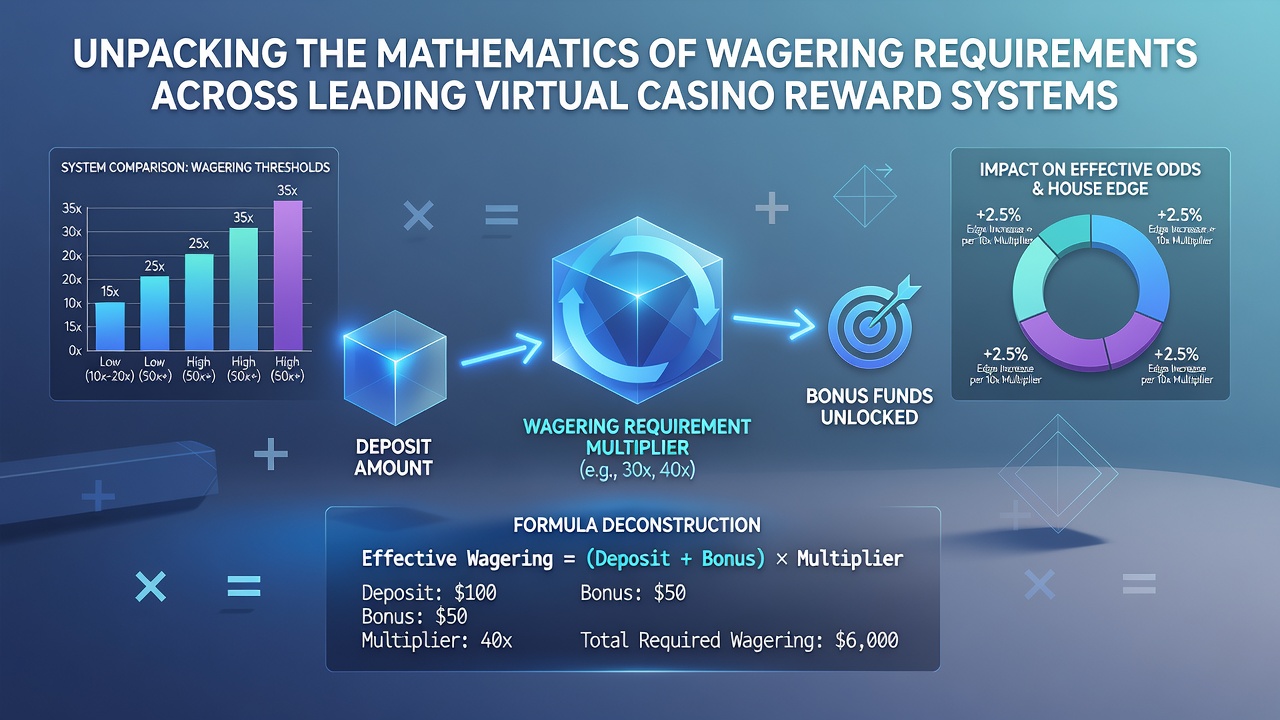
Operators calculate the required playthrough volume through straightforward multiplication yet layer additional variables that change the effective threshold, and researchers have documented how these layers compound across different reward structures. The basic equation takes the bonus amount multiplied by the wagering multiplier then divides by the average bet size to estimate the number of spins or hands needed, but platforms adjust this further by excluding certain games or capping maximum bets during the requirement period. Figures from regulatory filings reveal that when a platform limits bets to $5 per spin during wagering, the number of required actions increases substantially compared to unrestricted play.
Contribution weighting adds another dimension because not every dollar wagered counts equally toward completion, so experts note that a player using blackjack at 20 percent contribution must wager five times more than someone using qualifying slots to reach the same total. This weighting system appears consistently in terms and conditions across leading sites, and studies have quantified how it extends the average completion time from hours to days for many users.
Platform Variations in August 2026 Data
Comparisons of major virtual casino operators as of August 2026 demonstrate clear differences in how wagering requirements interact with game libraries and bonus values, with some systems favoring high-volatility slots while others apply stricter caps on table game contributions. One platform might set a 25x multiplier on deposit matches yet restrict live dealer games entirely, whereas another uses a 40x multiplier but allows 50 percent contribution from roulette and blackjack. Regulatory data collected from North American and European markets indicates that these choices alter the expected value of bonuses by measurable percentages, with higher multipliers and lower contributions reducing the mathematical return to the player.
Industry organizations have tracked how seasonal promotions in mid-2026 introduced temporary adjustments such as reduced multipliers on specific game categories, yet the core formulas remained unchanged. Observers note that players who track contribution percentages across multiple sites often discover patterns that allow more efficient completion of requirements when switching between platforms.
Impact on Expected Value and Completion Rates
Mathematical modeling of wagering requirements shows that the house edge combines with the multiplier to determine the net expected return from any given bonus, and researchers have published calculations that place many bonuses in negative expected value territory once all conditions apply. For example, a bonus with a 35x requirement on slots that carry a 4 percent house edge produces a theoretical loss that exceeds the bonus value itself in most scenarios. Australian Gambling Research Centre reports confirm similar findings when analyzing completion rates across thousands of player accounts, noting that only a small fraction of bonuses reach full clearance without additional deposits.
Maximum bet limits during the wagering period further modify outcomes because they prevent players from accelerating completion through larger wagers, and data indicates these caps reduce variance while extending the time to finish requirements. Platforms in different jurisdictions apply these limits inconsistently, with some enforcing them strictly through software controls and others relying on manual review of account activity.
Regional Regulatory Influences on Requirement Structures
Government agencies in multiple regions set boundaries around how operators can structure wagering requirements, and these rules produce measurable differences in the formulas used by platforms licensed under different authorities. teh Nevada Gaming Control Board oversees requirements that must appear clearly in bonus terms, whereas Canadian provincial regulators focus on transparency around contribution rates and time limits. Research from the University of Nevada, Las Vegas gaming studies program has examined how these regional rules affect the distribution of bonus values and completion difficulty across North American markets.
Operators adjust their systems to remain compliant while still maintaining profitability, which results in variations such as shorter time windows in stricter jurisdictions or higher multipliers where competition is lower. Those who have analyzed public filings observe that transparency requirements in certain markets have led to more detailed breakdowns of contribution percentages being published directly on casino sites.
Conclusion
The mathematics of wagering requirements across leading virtual casino reward systems rests on interconnected formulas that incorporate multipliers, contribution weights, bet caps, and game exclusions, and these elements combine to shape the practical value of any bonus offer. Data collected through regulatory channels and academic research demonstrates consistent patterns in how these structures operate, while regional differences continue to influence the specific thresholds applied by individual platforms. Players who examine the underlying equations gain clearer insight into the volume of play necessary to convert bonuses into withdrawable funds under the conditions set by each operator.