20 Jul 2026
Statistical Approaches to Real-Time Odds Modifications Amid Abrupt Weather Variations in Professional Football Betting Markets

Professional football markets rely on complex algorithms that recalibrate in-play wagers when sudden weather events alter game dynamics, and data shows these adjustments draw from multivariate regression frameworks combined with real-time meteorological inputs. Researchers have developed models that integrate wind speed, precipitation rates, temperature drops, and humidity levels into probability distributions for outcomes like passing yards, rushing efficiency, and total points scored. According to figures from the National Weather Service, unexpected storms can shift expected scoring margins by 10 to 15 percent within minutes, prompting betting platforms to update live odds through automated systems that process these variables continuously.
Core Components of Weather-Adjusted Betting Models
Models begin with baseline statistical distributions derived from historical game data across thousands of matches, yet they layer conditional adjustments based on current atmospheric conditions gathered from on-site sensors and satellite feeds. Bayesian updating techniques allow these systems to revise probabilities incrementally as new weather observations arrive, while machine learning ensembles such as random forests and gradient boosting machines identify non-linear interactions between weather factors and player performance metrics. Observers note that precipitation above 0.25 inches per hour correlates with reduced completion percentages in passing plays, and algorithms apply weighted coefficients to reflect this relationship during live wagers.
Time-series analysis plays a central role because weather shifts unfold rapidly during games, and autoregressive integrated moving average structures help forecast near-term changes over the next series or quarter. Data from the National Oceanic and Atmospheric Administration feeds directly into these pipelines, supplying granular forecasts that update every five minutes during active play periods. Those who study these markets find that temperature fluctuations below 40 degrees Fahrenheit increase fumble rates by measurable margins, leading models to recalibrate totals lines accordingly.
Integration of Live Data Streams and Algorithmic Triggers
Betting operators pull together multiple data streams including radar imagery, ground station reports, and player tracking information from league systems, then route them through decision engines that flag when thresholds are crossed. Thresholds trigger recalibrations when wind gusts exceed 20 miles per hour or visibility drops under 500 yards, and these events prompt immediate revisions to in-play propositions such as next-drive outcomes or player prop lines. Research indicates that models incorporating ensemble weather predictions reduce prediction error by up to 18 percent compared with static baselines, according to academic analyses published in sports analytics journals.
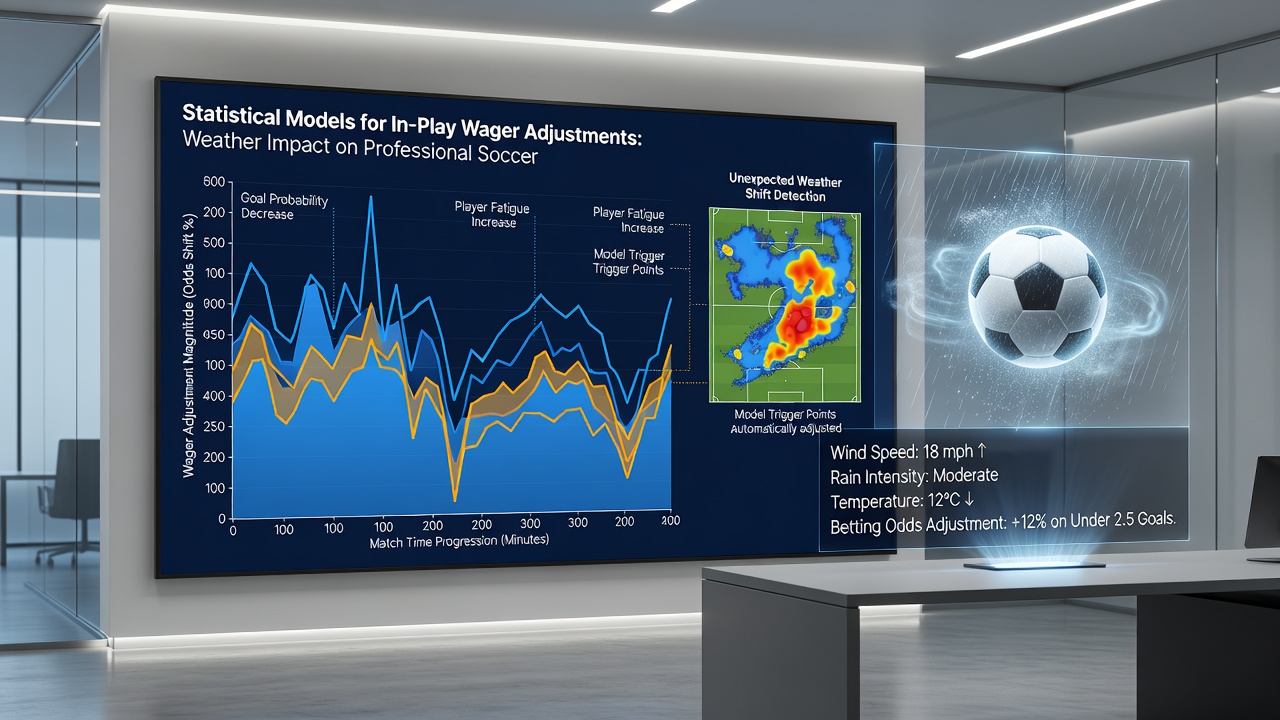
Reinforcement learning components have gained traction in recent implementations because they optimize adjustment strategies based on historical payout patterns under similar conditions, and these systems learn to balance risk exposure across correlated markets like spreads and over-under totals. During July 2026 training camp periods, several professional teams reported enhanced sensor networks on practice fields that mirror in-game data collection methods, allowing modelers to refine parameters ahead of regular season play. What's interesting is how these refinements translate into more precise live odds when actual games encounter similar microclimates.
Challenges in Model Accuracy and Market Responses
Latency between weather observation and odds publication remains a persistent constraint, yet distributed computing architectures have shortened this window to under two seconds in advanced platforms. Observers note that regional variations matter because coastal stadiums experience different precipitation patterns than inland venues, requiring location-specific calibration of regression coefficients. Studies from Canadian research institutions highlight that sudden temperature inversions affect ball trajectory in measurable ways, prompting adjustments to field goal probability estimates during critical moments.
Market liquidity influences how aggressively operators apply these models because thin markets on niche props allow larger swings before counterbalancing bets arrive. Data shows that high-volume games trigger more conservative recalibrations to avoid adverse selection from informed bettors who monitor weather feeds independently. Industry reports from Australian gaming associations emphasize the value of transparent model documentation for maintaining regulatory compliance across jurisdictions that oversee sports wagering operations.
Conclusion
Statistical frameworks for adjusting in-play wagers during unexpected weather shifts continue to evolve through integration of advanced meteorological data and adaptive algorithms, and evidence from multiple regulatory environments demonstrates measurable improvements in predictive accuracy. Platforms that deploy these systems maintain competitive edges by responding swiftly to environmental changes that alter game probabilities, while ongoing refinements from academic and industry sources support further precision in live betting markets.