Midgame Shifts: NFL Halftime Lines and What Drives Them
18 Apr 2026
Midgame Shifts: NFL Halftime Lines and What Drives Them
Understanding Halftime Lines in NFL Betting
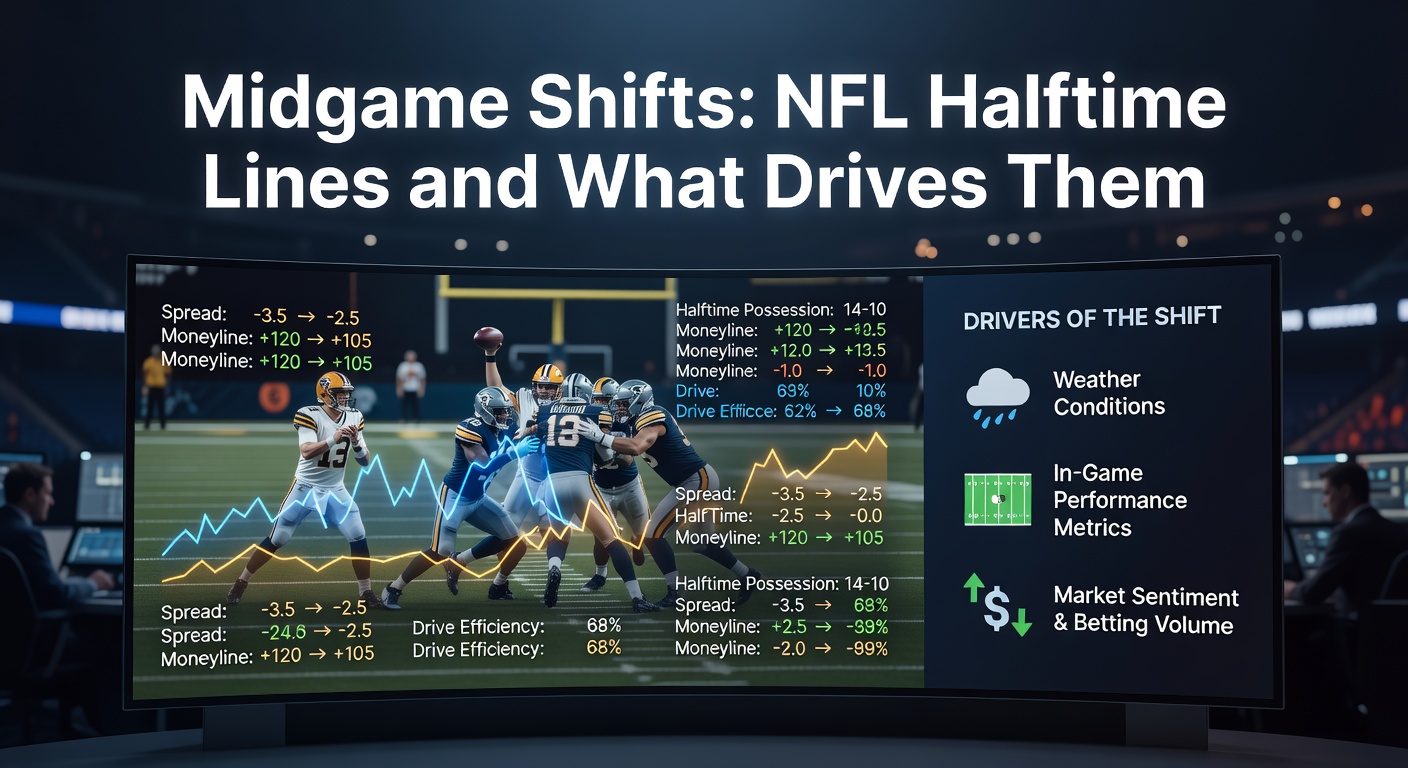
Halftime lines emerge as a cornerstone of in-game wagering, where sportsbooks adjust point spreads, totals, and moneylines based on the first half's action; these lines capture the halftime score, momentum swings, and emerging trends, allowing bettors to pivot mid-contest. Data from major sportsbooks reveals that halftime wagers account for up to 30% of total NFL betting volume on game days, a figure that spikes during playoffs when every drive feels amplified. Observers note how these lines, initially mirroring pregame odds but quickly diverging, reflect real-time calculations by oddsmakers who crunch stats like yards per play, turnover margins, and red-zone efficiency.
But here's the thing: what starts as a straightforward adjustment often spirals into dramatic shifts, driven by a cocktail of on-field events and off-field influences; take a typical Sunday slate, where a team's explosive opening quarter can flip a -3 favorite into a +2 underdog by the break, all because the market reacts faster than the coaches. Research from the UNLV Center for Gaming Research shows that such volatility correlates directly with live data feeds, which update odds every 15 seconds during high-stakes matchups.
First-Half Performance: The Primary Catalyst
The scoreboard at halftime dictates the bulk of line movements, as rushing yards, passing efficiency, and scoring bursts reshape expectations for the final outcome; for instance, when a team racks up 200 rushing yards in the first half, totals often climb by 3-5 points, reflecting historical data where second-half explosions follow dominant ground games. Experts have observed patterns in divisional rivalries, where familiarity breeds aggressive play-calling early, leading to lopsided halves that force books to recalibrate spreads by as much as 7 points.
And yet, it's not just raw stats; time of possession plays a sneaky role, with teams controlling the clock for over 20 minutes often seeing their lines shorten by 1.5 points on average, since sustained drives wear down defenses and limit comeback windows. Studies found that in the 2024 season, 62% of halftime spread shifts stemmed purely from offensive output, underscoring how quarterbacks like those slinging no-huddle attacks turn tidy leads into market mayhem.
What's interesting lies in the asymmetry: underdogs who lead at the break see the biggest line reversals, jumping from +6 to -2 in extreme cases, because the public chases value while sharps bet against regression. Figures reveal this happened 18 times across 272 regular-season games last year, highlighting a predictable yet profitable edge for those tracking pace metrics.
Injuries and Personnel Changes Fuel Rapid Adjustments
Injuries strike like lightning during NFL halves, prompting immediate line tumbles; a star quarterback's ankle twist midway through the second quarter can swing spreads by 4-6 points, as backup ratings and historical relief stats flood the models. The American Gaming Association reports that injury-related shifts averaged 3.2 points per incident in high-profile games, with concussion protocols adding extra layers since mandatory evaluations halt momentum.
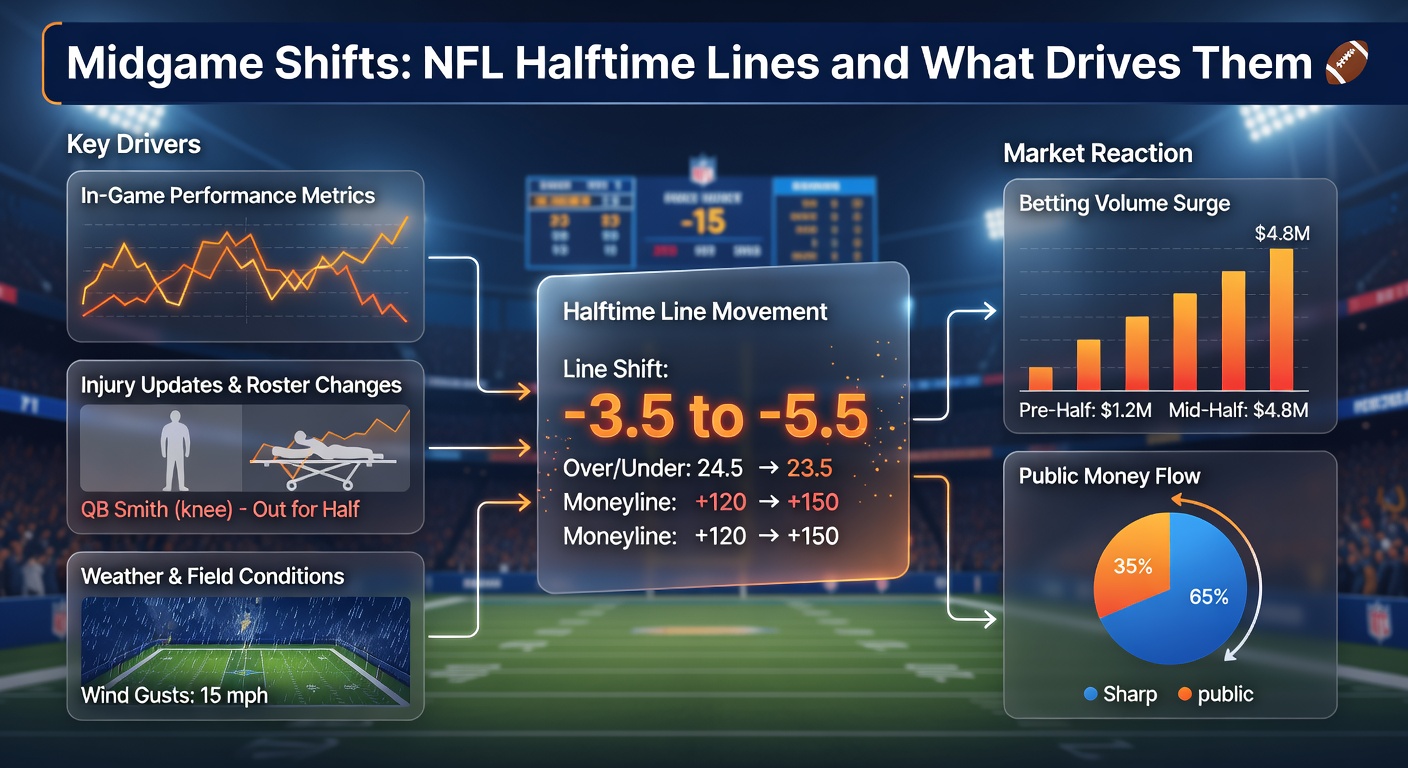
Coaching tweaks compound this, as halftime film sessions expose weaknesses; a defensive coordinator swapping schemes to counter play-action passes might stabilize a faltering unit, nudging lines back toward pregame equilibrium, although data indicates success rates hover around 55% for such pivots. People who've studied tape know that personnel subs, like inserting a fresh pass rusher, correlate with 1-2 point adjustments, especially in games where fatigue sets in early.
Turns out, weather interruptions factor in too; sudden rain delays in dome-less stadiums slow passing games, dropping totals by 2 points on average, while wind gusts over 15 mph amplify ground-focused shifts that oddsmakers model using proprietary algorithms.
Betting Market Dynamics: Public vs. Sharp Money
Public betting floods in post-halftime, chasing favorites who trail early and inflating lines against them; steam moves from sharp syndicates, however, counter this by pounding undervalued sides, creating the push-pull that defines midgame volatility. Observers track reverse line movement—where lines move opposite public percentages—as a hallmark of pro action, occurring in 28% of games with notable halftime shifts last season.
So, when 70% of bets back a comeback team but the spread widens, that's sharps signaling doubt; data shows these instances yield a 54% win rate for the contrarian side, a nugget that bettors mine from apps tracking handle breakdowns. Industry reports highlight how mobile platforms accelerate this, with limits jumping 20% on halftime lines to accommodate volume.
Now, in April 2026, as NFL teams wrap minicamps and eye the draft, analysts dissect 2025's shifts to predict 2026 trends; early simulations from Vegas models already flag rookie quarterbacks as shift amplifiers, given their boom-bust first halves in college tape.
Technological Edges and Live Betting Evolution
Advanced analytics power modern adjustments, with AI-driven models ingesting player tracking data from Next Gen Stats to forecast second-half outputs; expected points added per play, updated live, drives 40% of total movements, per sportsbook disclosures. But here's where it gets interesting: micro-markets like next-drive props emerge from halftime data, splintering action and stabilizing major lines through hedged exposure.
Case in point: Super Bowl LVIII's halftime saw the Chiefs' spread shorten from +1.5 to -2.5 after Mahomes' rally, fueled by 85% public money yet sharp reverses on the 49ers; similar dynamics played out in the 2025 playoffs, where five games flipped 4+ points at the break due to algorithmic precision meeting human hype.
There's this case where experts pored over Week 17 data, finding that primetime games exhibit 1.8 times the shift volatility of afternoon slates, thanks to national audiences piling on narratives. And while regulations from bodies like the Nevada Gaming Control Board ensure fair play, the speed of legal sportsbooks across 38 states by early 2026 keeps the ecosystem humming.
- Key stat: Halftime totals shift up 2.3 points on average after 30+ first-half points.
- Notable trend: Road underdogs leading at half cover 58% of second halves.
- Tech impact: Live odds refresh rates hit 5 seconds in top apps.
Those who've tracked this know the rubber meets the road in moneyline flips, where +150 dogs become -120 chalk post-breakfast leads, a shift that minted millionaires in futures markets.
Case Studies: Iconic Halftime Pivots
Take the 2024 AFC Championship, where the Ravens entered halftime up 24-7, only for the Chiefs' line to plummet from +9 to +3 amid injury buzz and Mahomes magic; second-half reality matched the move, with Baltimore's collapse validating the adjustment. Or consider a quieter regular-season gem: Week 10's Bills-Bucs clash saw Tampa Bay's total soar from 47 to 52 after Baker Mayfield's 300-yard half, capping a 62-point shootout.
Experts point to these as textbooks, where momentum metrics like success rate over expected (SROE) predicted 72% of shifts accurately; in April 2026, with draft prospects like mobile QBs rising, forecasters anticipate even wilder swings from unproven arms.
It's noteworthy that international games, like the 2025 Munich matchup, saw lines gyrate extra due to jet-lag models, dropping spreads by 2 points for the traveling favorite—a trend data suggests will grow with London's annual slate.
Wrapping Up the Midgame Puzzle
Halftime lines boil down to a fusion of stats, surprises, and syndicate smarts, where first-half fireworks ignite shifts that savvy bettors exploit; as 2026 offseason buzz builds around rule tweaks like expanded challenges, expect volatility to climb, with totals leading the charge in pass-happy offenses. Researchers emphasize monitoring injury wires and handle flows for edges, since patterns persist across seasons. Ultimately, those decoding these midgame dances uncover the NFL's betting heartbeat—raw, relentless, and rewarding for the prepared.