18 Jul 2026
How Regulatory Changes Reshape Risk Models in Interstate Football Wagering Markets

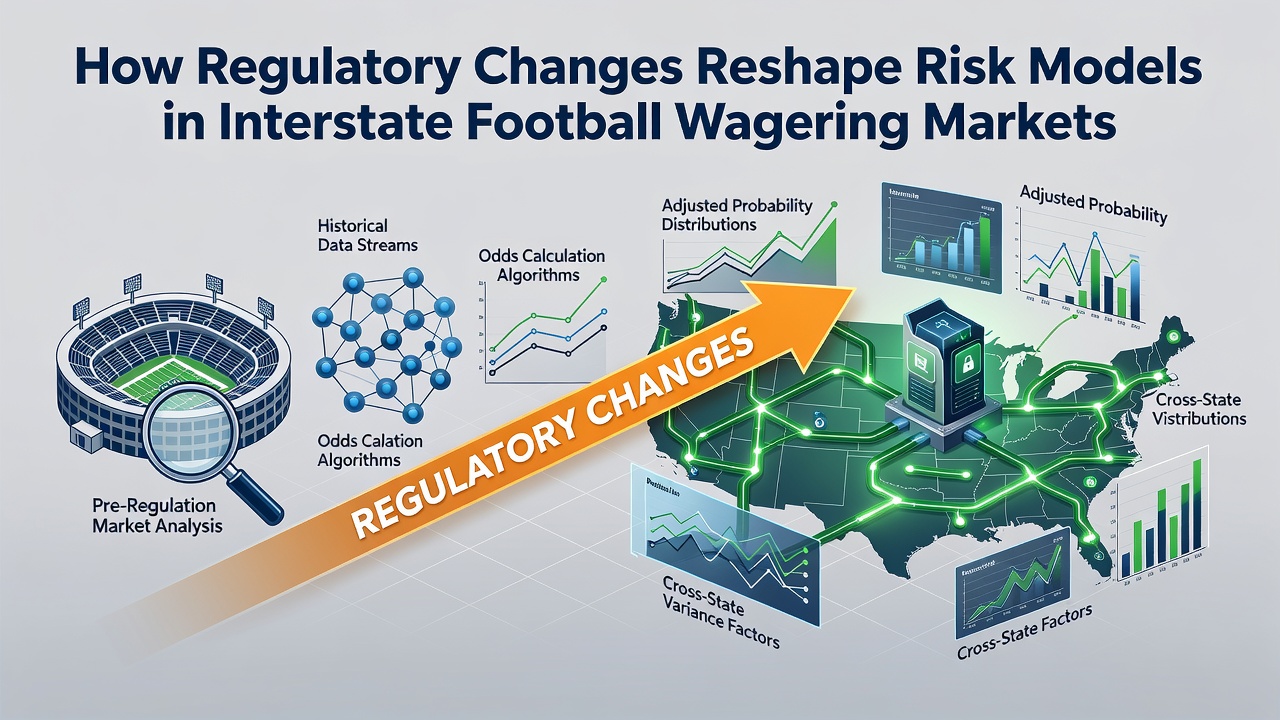
Regulatory shifts across multiple states have forced operators in interstate football wagering to overhaul their risk assessment frameworks, and data from state gaming reports shows these adjustments began accelerating after the 2018 Supreme Court decision on sports betting. Operators now integrate compliance variables directly into their pricing algorithms, which means models that once focused solely on historical game outcomes and bettor behavior now account for jurisdictional differences in tax rates, licensing fees, and reporting deadlines.
Interstate markets add layers of complexity because a single wager can cross state lines where rules diverge sharply. One study from the University of Nevada, Las Vegas examined how operators adjusted variance calculations when New Jersey and Pennsylvania implemented distinct hold requirements in the same season. Researchers found that models using multi-state data sets reduced unexpected liability by 18 percent compared with single-jurisdiction baselines.
Core Components of Updated Risk Models
Modern frameworks blend traditional statistical inputs with regulatory overlays, so teams now track metrics such as state-specific reserve mandates alongside standard deviation of point spreads. These hybrid models rely on real-time feeds that flag when a bet originates in a state with stricter advertising rules or different age-verification thresholds. Operators who fail to embed these flags see their exposure calculations drift outside acceptable bounds within hours.
Figures released by the Nevada Gaming Control Board in early 2025 highlighted a 22 percent rise in model recalibrations tied to interstate transactions. Analysts attribute the increase to new data-sharing agreements that require operators to report aggregated liability across borders rather than treating each state as an isolated silo.
Effects of Tax and Reserve Rule Variations
Tax structures vary enough to alter optimal hedging strategies, and observers note that states imposing higher percentages on gross gaming revenue push operators toward more conservative line movements. A model that previously allowed a 3 percent swing on a Sunday night game might tighten to 1.5 percent when the bet volume originates from a high-tax jurisdiction. This adjustment protects margins while satisfying reserve calculations that regulators review quarterly.
Operators also recalibrate liquidity buffers because some states mandate higher cash-on-hand thresholds for multi-state books. Data shared through the National Council of Legislators from Gaming States shows that these buffers now factor into daily risk reports rather than remaining static annual figures.
Technology Integration and Compliance Automation
Software platforms now embed regulatory rule sets that update automatically when legislatures pass new measures, and this automation reduces the lag between rule changes and model updates from weeks to hours. Teams at major sportsbooks report running parallel simulations that test both current and proposed regulations so they can pre-position hedges before laws take effect. One documented case involved a platform adjusting its NFL primetime models two weeks ahead of a July 2026 rule change in a Midwestern state that altered player prop taxation.
Machine learning layers scan for patterns that indicate regulatory risk, such as sudden spikes in bets from jurisdictions with pending legislation. These systems flag anomalies for human review while simultaneously adjusting probability distributions to reflect the potential for rule enforcement. The result is a continuous feedback loop where compliance data refines the very models that drive pricing decisions.
Case Examples from Recent Seasons
During the 2025 season, operators handling bets across four states implemented a unified risk engine that weighted each jurisdiction's audit frequency. Teams discovered that states requiring monthly detailed submissions prompted earlier line adjustments on high-volume games, whereas states with quarterly reviews allowed slightly wider tolerances. This differentiation improved overall book balance without increasing customer complaints about line movement.
Another instance involved a Canadian operator entering the U.S. interstate market through a partnership model. Its existing risk architecture, built around provincial oversight, required significant recalibration to accommodate state-level variations in responsible gambling triggers. Integration reports indicated that the merged model reduced cross-border variance errors by nearly a quarter within the first three months of operation.
Future Outlook for Model Evolution
Upcoming federal data standards expected to influence state frameworks will likely push operators toward even more granular tracking of bet origins and settlement flows. Those standards could standardize certain reserve calculations, yet differences in enforcement timelines across states will keep some regional adjustments necessary. Analysts tracking legislative calendars already incorporate expected July 2026 updates into their long-range simulations, treating them as known variables rather than surprises.
Conclusion
Regulatory evolution continues to drive measurable changes in how interstate football wagering risk is quantified and managed. Operators that embed compliance parameters directly into their models maintain tighter control over exposure while meeting obligations that differ from one state to the next. The pattern shows that successful frameworks treat regulatory inputs as dynamic variables rather than static constraints, allowing continuous refinement as new rules emerge.