20 Jun 2026
Dynamic Odds Calibration: The Mathematical Models Driving Casino Responses to Player Patterns
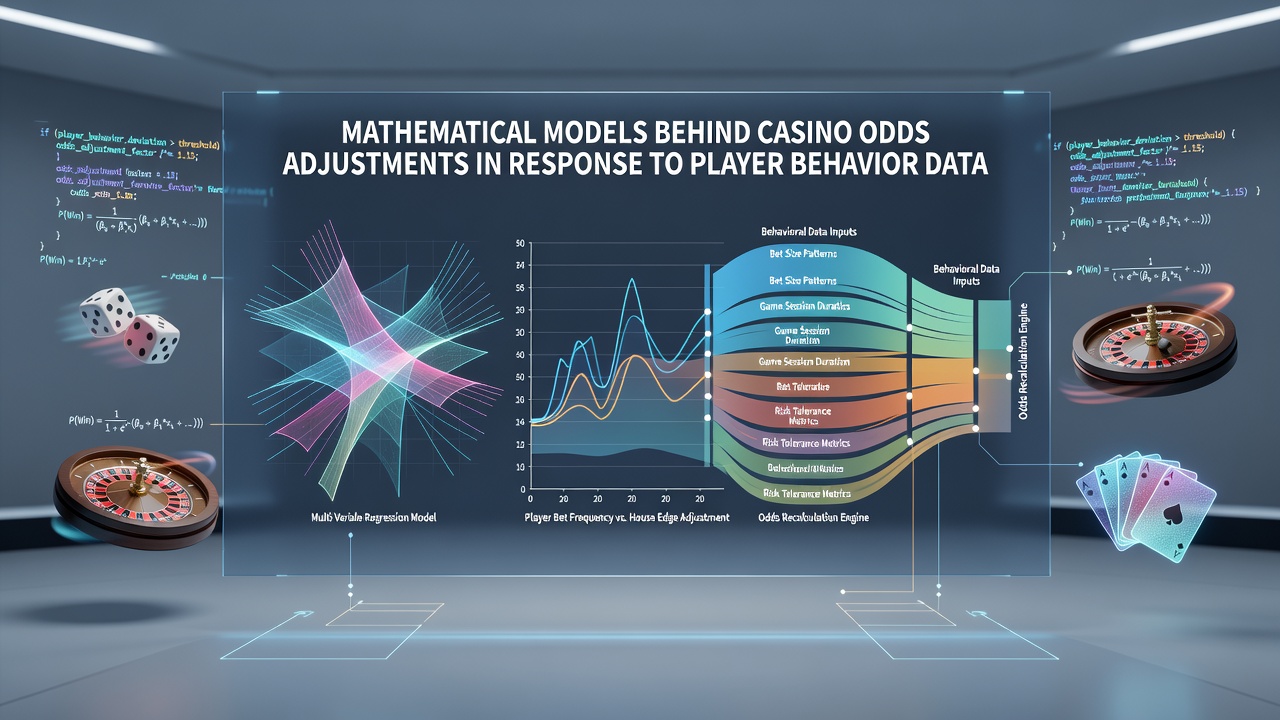
Mathematical models form the backbone of how casinos monitor and respond to player behavior data, allowing operators to recalibrate odds in real time while staying within regulatory bounds, and these systems rely on statistical frameworks that process vast datasets from slot machines, table games, and digital platforms.
Foundational Probability Structures
Expected value calculations sit at the center of these adjustments because they quantify the long-term house edge across thousands of individual bets, and operators feed player-specific metrics such as average wager size, session length, and game selection into these equations to project revenue shifts. Bayesian updating techniques then refine those projections as new data arrives, letting the models shift probability distributions rather than resetting them entirely each time a player places another bet.
Markov chain models track sequences of player actions across multiple visits, capturing transitions between high-stakes and low-stakes play or between different game types, while reinforcement learning algorithms test various odds configurations against historical outcomes to identify settings that maintain target margins without triggering regulatory flags.
Behavioral Data Inputs and Processing
Casinos collect granular information including bet frequency, win-rate tolerance, and time-of-day preferences through loyalty card systems adn anonymous tracking on digital terminals, and these inputs flow into clustering algorithms that group players by risk profiles. Once clusters form, analysts apply regression models to detect correlations between specific behaviors and revenue outcomes, which then trigger predefined odds modifications such as slight increases in hold percentages on certain machines or adjustments to table minimums during peak hours.
What's interesting is how these models incorporate time-decay factors so that older data loses influence gradually, preventing overreactions to short-term streaks while still responding to sustained pattern changes. In June 2026 several North American jurisdictions began requiring operators to log the exact parameters used in each adjustment cycle, creating audit trails that regulators can cross-reference against player complaint records.
Algorithmic Implementation Examples
One common approach combines Monte Carlo simulations with live data streams to forecast the impact of proposed odds changes across millions of potential future bets, and the simulation outputs feed directly into decision trees that determine whether an adjustment crosses internal risk thresholds. Another technique uses survival analysis to estimate how long a given player segment will continue gambling under different payout structures, allowing operators to fine-tune return-to-player percentages on a per-segment basis rather than applying uniform changes across an entire floor.
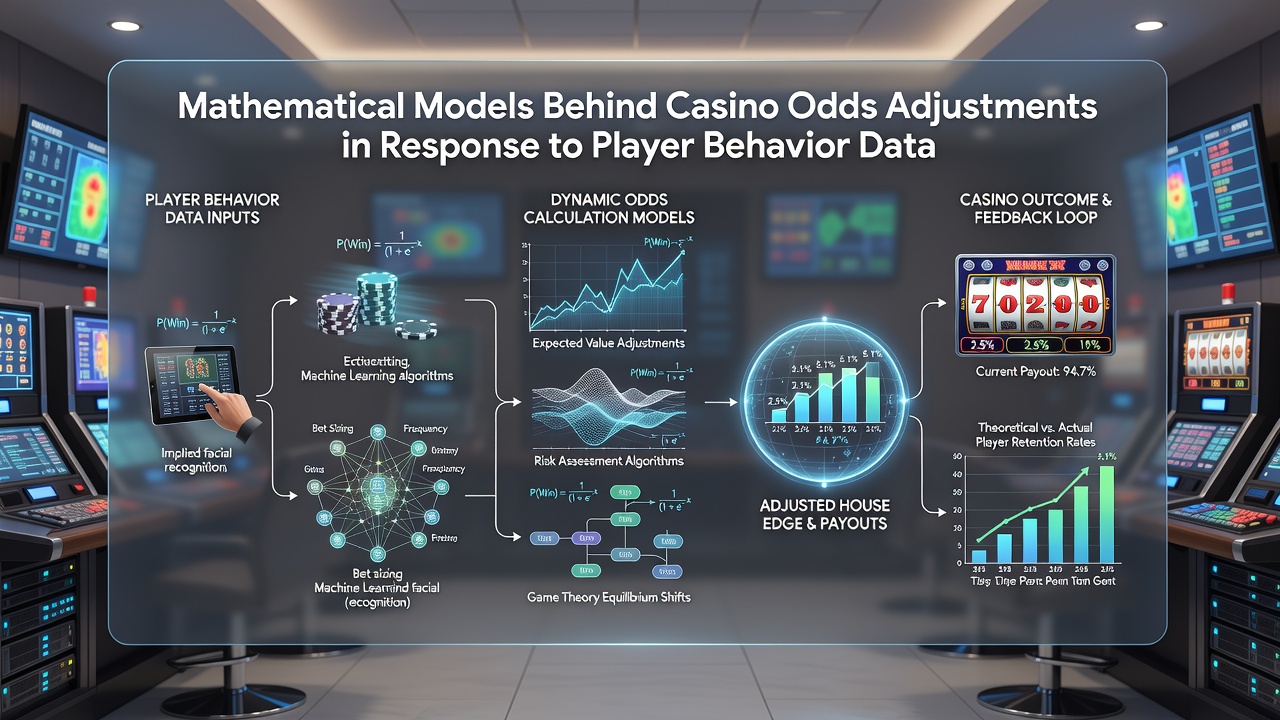
Observers note that these systems often run in parallel layers, with one model focused on short-term volatility control and another dedicated to long-term profitability targets, and the outputs are reconciled through optimization routines that balance both objectives. Data from the Nevada Gaming Control Board shows that such layered approaches have become standard in larger properties since the early 2020s.
Regulatory and Compliance Frameworks
Regulatory bodies in multiple regions require that any automated odds adjustments remain within approved mathematical boundaries, and operators must demonstrate through submitted reports that their models do not create unfair advantages beyond the licensed house edge. The Alcohol and Gaming Commission of Ontario, for instance, mandates periodic third-party audits of the underlying code and data pipelines, while the American Gaming Association has published voluntary guidelines encouraging transparency in how behavioral data influences game parameters.
Researchers from institutions such as the University of Nevada, Las Vegas have examined how these compliance requirements shape model design, finding that constraints on maximum adjustment speed often lead developers to favor gradual Bayesian updates over more aggressive machine-learning techniques.
Conclusion
The mathematical models behind casino odds adjustments continue to evolve as computing power and data availability increase, yet they remain anchored in core statistical principles that balance revenue goals against regulatory oversight. Operators that maintain robust documentation and validation processes can adapt their systems to new player behavior patterns while satisfying the reporting demands that emerged in June 2026 and beyond.