24 Aug 2026
Betting Archives Expose Long-Term Changes in NFL Wagering Preferences
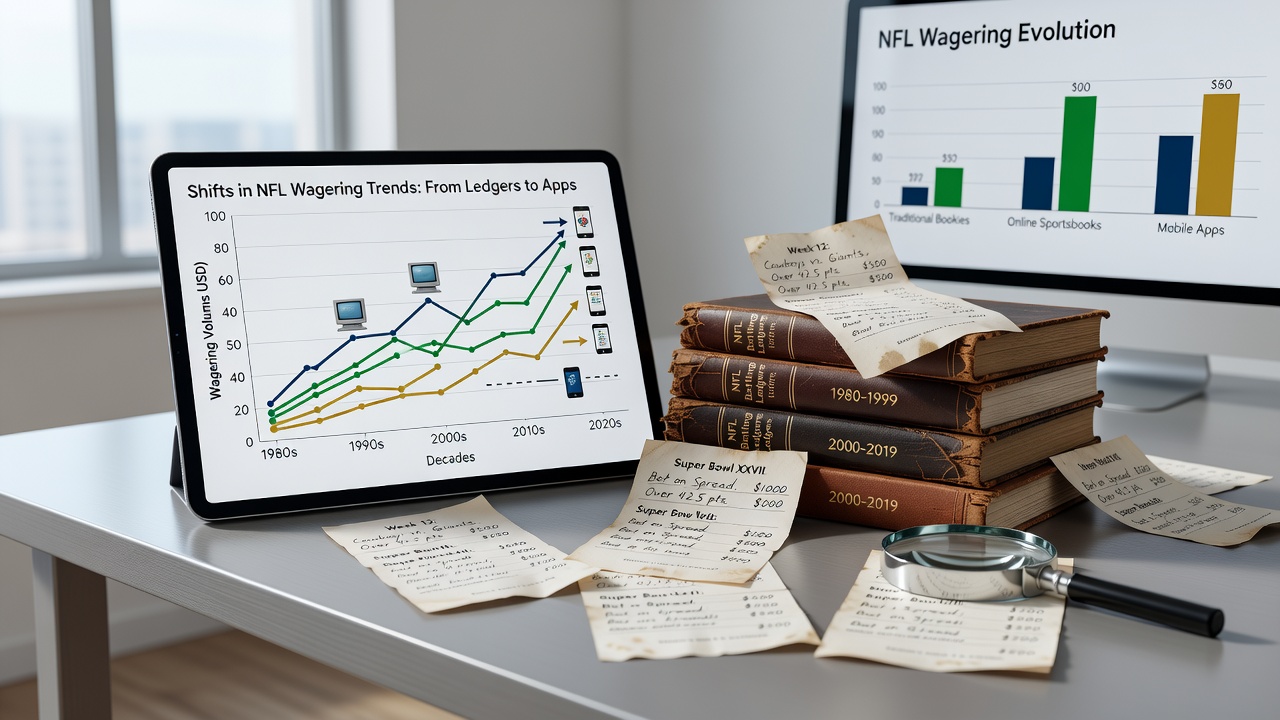
Archival sports betting records from Nevada sportsbooks and state regulatory filings provide detailed snapshots of NFL wagering activity spanning the 1970s through the present, and analysts continue to examine these ledgers to identify measurable shifts in bet types, volumes, and timing preferences across multiple decades.
Records maintained by the Nevada Gaming Control Board document that straight point-spread bets dominated NFL action during the 1970s and 1980s, accounting for the majority of handle while totals and basic moneylines trailed far behind. Those same archives show that average bet sizes remained relatively modest compared with later eras, and most wagers were placed in person at casino sportsbooks rather than through remote channels.
Early Patterns in NFL Handle Data
During the 1980s and early 1990s, archival ticket stubs and daily summary sheets reveal that Super Bowl betting concentrated heavily on the final score margin, with limited options for quarter-specific or player-performance wagers. Researchers who reviewed these physical records note that futures bets on season-long outcomes existed but represented a small fraction of total NFL volume, largely because many states maintained strict prohibitions on sports wagering outside Nevada.
What's interesting is how the introduction of new bet categories in the late 1990s began to appear in the same Nevada ledgers. Prop bets tied to individual player statistics started showing measurable handle increases, particularly for high-profile quarterbacks and running backs, while the overall percentage of straight-spread wagers began a gradual decline that continued into the following decade.
Digital Transition and Bet-Type Diversification
By the mid-2000s, computerized transaction logs from major sportsbooks captured the first widespread adoption of online and phone wagering platforms, and these digital records allow direct comparison with earlier paper-based systems. Data compiled during this period indicates rising interest in teaser bets and parlays, categories that had previously occupied minimal space in the physical archives.
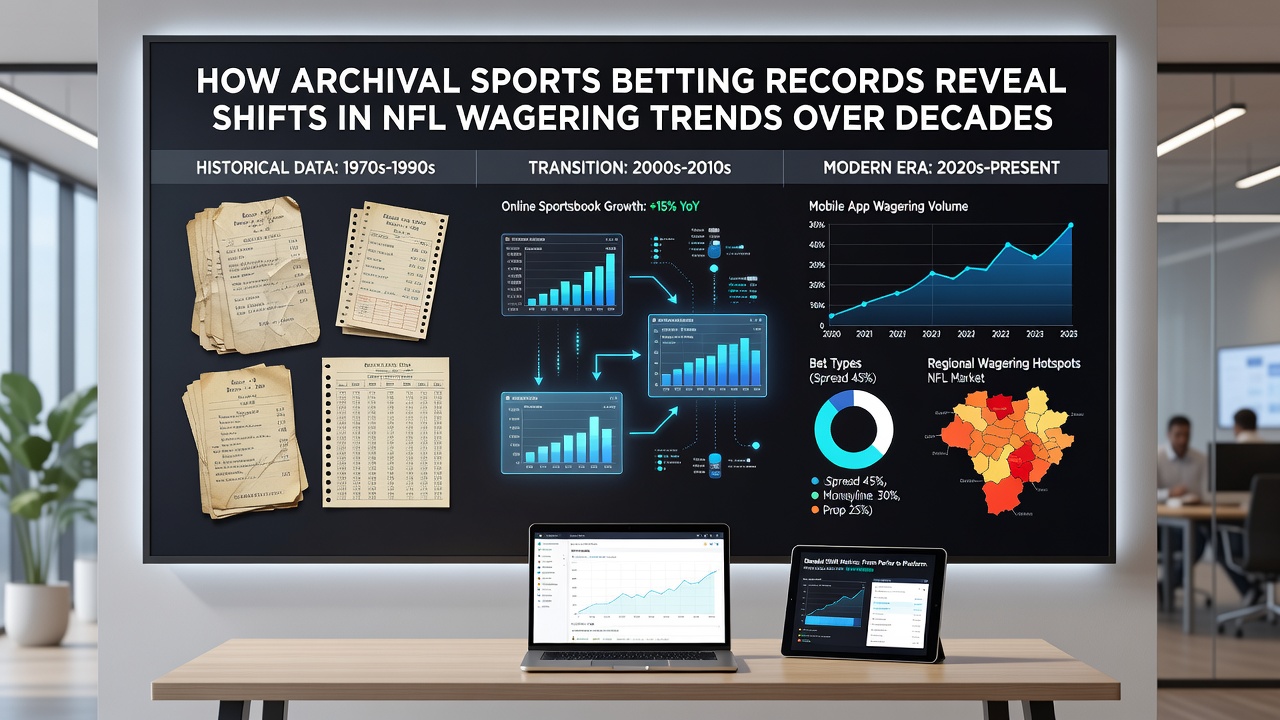
After the 2018 Supreme Court decision that opened the door for state-regulated sports betting, newly created regulatory reports from multiple jurisdictions began supplementing the long-running Nevada data sets. Observers note that mobile-app transaction records quickly became the dominant source of NFL handle, and the proportion of in-game wagers rose sharply compared with pregame activity documented in earlier decades.
Recent Volume and Category Shifts Through August 2026
State-level reports issued through August 2026 continue to track the ongoing migration toward player-prop and same-game parlay combinations, categories that now generate substantial portions of NFL handle according to aggregated regulatory summaries. Archival comparisons show that futures betting on awards such as MVP and Rookie of the Year has also expanded beyond the levels recorded in the 1990s and 2000s.
Those who've examined multi-decade data sets point out that average wager timing has moved later into the week and even into game windows, a pattern that appears consistently once mobile platforms entered widespread use. Regulatory filings from states that legalized sports betting after 2018 further confirm that live-betting options now account for a larger share of total NFL volume than they did when only Nevada records existed.
Conclusion
Decades of preserved betting ledgers and regulatory filings therefore document a clear progression from limited, in-person straight bets toward diversified, technology-enabled wagering options that include props, parlays, and in-game activity. Continued analysis of these archives supplies concrete evidence of how NFL wagering preferences have evolved in measurable ways across successive eras.