15 Jun 2026
Algorithmic Refinements in Point Spread Predictions for Extended NFL Campaigns
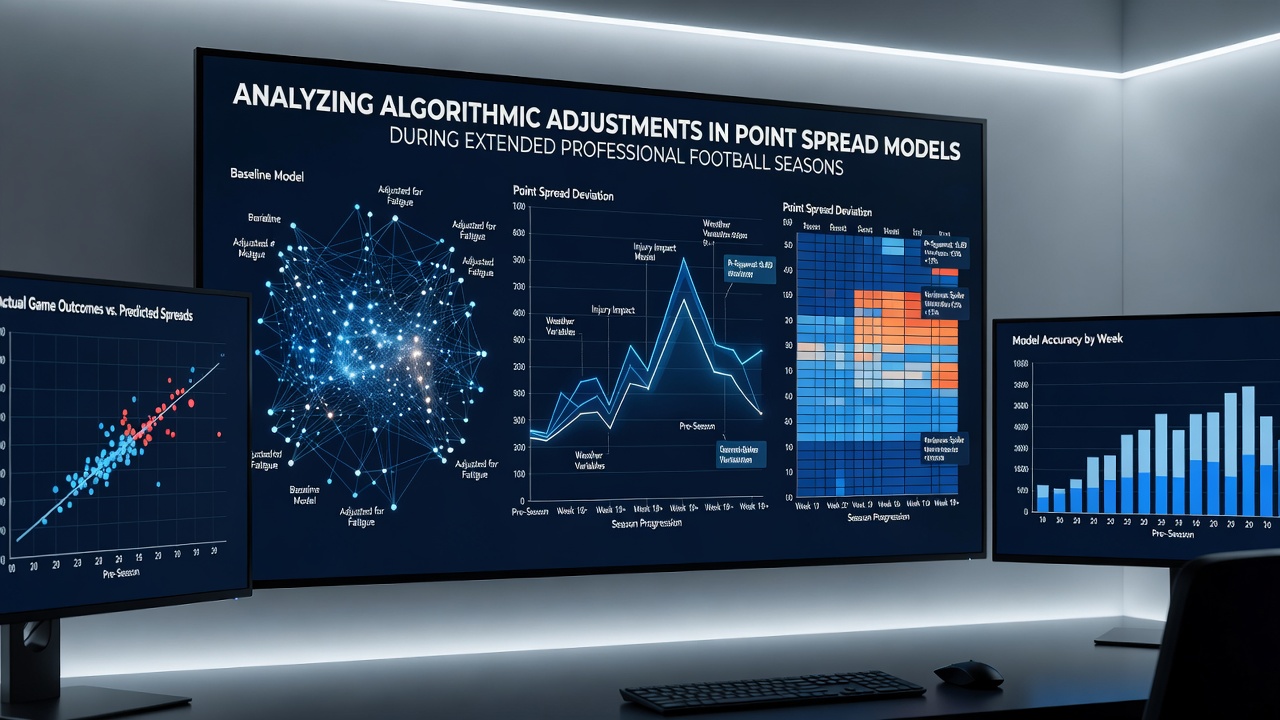
Point spread models in professional football rely on layers of statistical inputs that shift as seasons stretch beyond standard lengths, and analysts track these changes through continuous data feeds from team performances, injury reports, and schedule demands. Extended campaigns introduce variables such as cumulative player fatigue and weather impacts over additional weeks, which prompt modelers to recalibrate weighting factors in real time. Researchers at academic institutions have documented how these adjustments maintain predictive accuracy when regular season games extend into late January or beyond.
Core Components of Point Spread Algorithms
Basic models begin with historical team data and incorporate current season metrics including offensive efficiency ratings, defensive yardage allowances, and turnover differentials, yet extended seasons require dynamic updates to these baselines because late-stage games often feature altered lineups due to rest strategies or medical considerations. Data from multiple decades shows that algorithms which fail to adjust for increased variance in player availability produce larger errors in spread projections during playoff pushes. Observers note that teams in the National Football League maintain internal analytics departments that feed proprietary adjustments into external betting market models, creating feedback loops visible in line movements at sportsbooks.
Impacts of Prolonged Seasons on Model Variables
Extended professional football seasons amplify the influence of travel schedules and back-to-back game situations, leading programmers to elevate the importance of rest differentials and recovery metrics within their equations. Studies from sports research centers indicate that models incorporating cumulative workload data reduce projection variance by measurable percentages when compared against static versions. In June 2026 analysts across the league continue reviewing data sets from the prior campaign to refine parameters ahead of training camps, focusing on how playoff extensions affected closing spreads in conference championship matchups.
Key Adjustment Mechanisms
- Real-time injury probability curves that scale with game density
- Weather pattern integrations drawn from extended forecast archives
- Strength-of-schedule modifiers updated after each additional week
- Coaching tendency shifts tracked through play-by-play logs
Those who build these systems often apply machine learning techniques to detect when traditional regression outputs diverge from observed results in lengthened schedules, and the process involves retraining subsets of the model on recent high-volume data periods. One study revealed that incorporating opponent-specific fatigue indices improved accuracy during seasons that ran into February. What's interesting is how these refinements propagate through betting markets as sharp bettors identify discrepancies before lines stabilize.

Data Sources and Validation Practices
Validation relies on back-testing against archived spreads from prior extended seasons, and organizations such as the Stats Perform research division publish comparative error rates that help external modelers benchmark their own updates. Government statistical agencies in North America supply supplementary datasets on player health trends that feed into workload algorithms. Academic papers from Canadian universities have examined how cross-border travel in international preseason games affects subsequent regular season projections, providing additional calibration points.
Programmers segment data into rolling windows that emphasize the most recent 20 to 30 games when seasons lengthen, because older information loses relevance amid roster changes and scheme evolutions. This segmentation prevents older patterns from diluting signals that emerge only in extended campaigns. Evidence suggests models using shorter windows achieve tighter confidence intervals during postseason periods compared with full-season averages.
Market Reactions and Line Stability
Betting exchanges register rapid line adjustments once algorithmic outputs become public through betting syndicates, and these movements often stabilize within hours when multiple independent models converge on similar spread values. Extended seasons produce more volatile early-week lines because injury reports arrive later in the schedule cycle. Industry reports from European betting associations note that liquidity increases in NFL markets during January extensions, which in turn accelerates the incorporation of refined algorithmic signals.
Take one researcher who tracked spread closures across three consecutive lengthened seasons and found that models updated daily outperformed weekly recalibrations by consistent margins in divisional games. Those patterns emerge because daily updates capture micro-changes in practice participation that weekly aggregates overlook.
Conclusion
Algorithmic adjustments in point spread models during extended professional football seasons follow structured processes driven by accumulating performance data, injury trends, and schedule variables. Continuous validation against historical outcomes allows these systems to maintain reliability even when campaigns stretch beyond traditional timelines. Observers in the field continue monitoring how June 2026 preparations incorporate lessons from recent extended seasons to prepare the next generation of predictive tools.